
Understanding India’s AI Ethics and Accountability Bill 2025
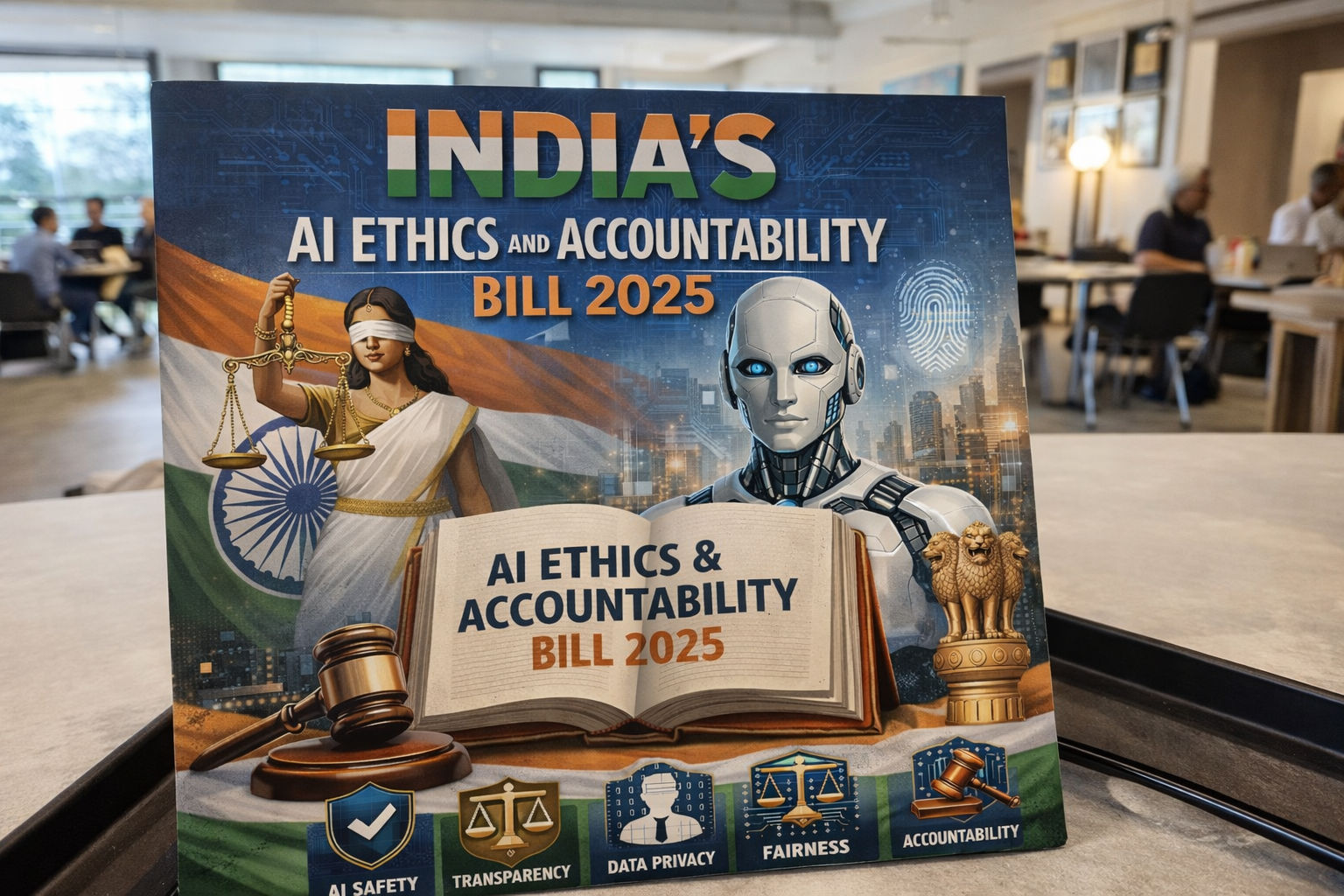
Technology is moving faster than ever, especially with Artificial Intelligence (AI). For a long time, India allowed AI companies to grow freely without many strict rules. This is often called a "light-touch" approach. However, as AI starts making bigger decisions in our lives, the government is looking at ways to make it safer.
On December 17, 2025, a new proposal called the Artificial Intelligence (Ethics and Accountability) Bill was introduced in the Lok Sabha (the lower house of India's Parliament).
What is a "Private Member’s Bill"?
The Bill was introduced by MP Bharti Pardhi. Because she is not a government minister, this is called a Private Member’s Bill.
In simple terms:
- Most laws in India are started by the government.
- A Private Member’s Bill is started by an individual Member of Parliament.
- These bills rarely become actual laws immediately, but they are very important because they start a big conversation. They often act as a "rough draft" that the government uses later to create official rules.
Think about how often AI affects you. It suggests videos, helps banks decide who gets a loan, and even helps companies decide who to hire. But AI isn't perfect. It can be biased, it can create "deepfakes" (fake videos), or it can be used for secret spying.
This Bill aims to move India from "voluntary advice" to "mandatory rules" to protect citizens.
The 3 Main Goals of the Bill
1. No More "Secret" Decisions (Transparency)
Some AI models are like "black boxes"—even the creators don't know exactly how the AI made a choice. The Bill says that if an AI rejects your job application or a bank loan, the company must be able to explain why in simple language. This is called "Algorithmic Explainability."
2. The AI Ethics Committee
The Bill proposes a special group of experts to watch over AI in India. Their job would be to:
Check for Bias: Ensure AI doesn't discriminate against people based on their religion, caste, or gender.
Identify Risks: Decide which AI (like facial recognition) needs extra safety checks.
Report Failures: Make sure companies tell the government if their AI makes a dangerous mistake.
3. Serious Penalties
To make sure companies take these rules seriously, the Bill suggests heavy fines. If a company ignores the rules or hides its data sources, it could be fined up to ₹5 crore.
Is This Law Active Now?
No, it is not passed yet. As of February 2026, it is still just a proposal being discussed in Parliament.
However, it is a big deal because it shows that India is moving toward a future where AI must be ethical and fair. Even though the law isn't active, many tech companies are already starting to change how they work to match these ideas.
Why This Matters for Students and Citizens
Understanding these rules is important because:
Privacy: It helps protect your personal information from being used in secret surveillance.
Fairness: It ensures that when you apply for a college or a job in the future, an AI isn't unfairly rejecting you because of a glitch or a bias in its training.
Trust: It builds a digital world where we can trust that "Made in India" AI is safe for everyone.
Comments 0