Constitutional Law

9 articles

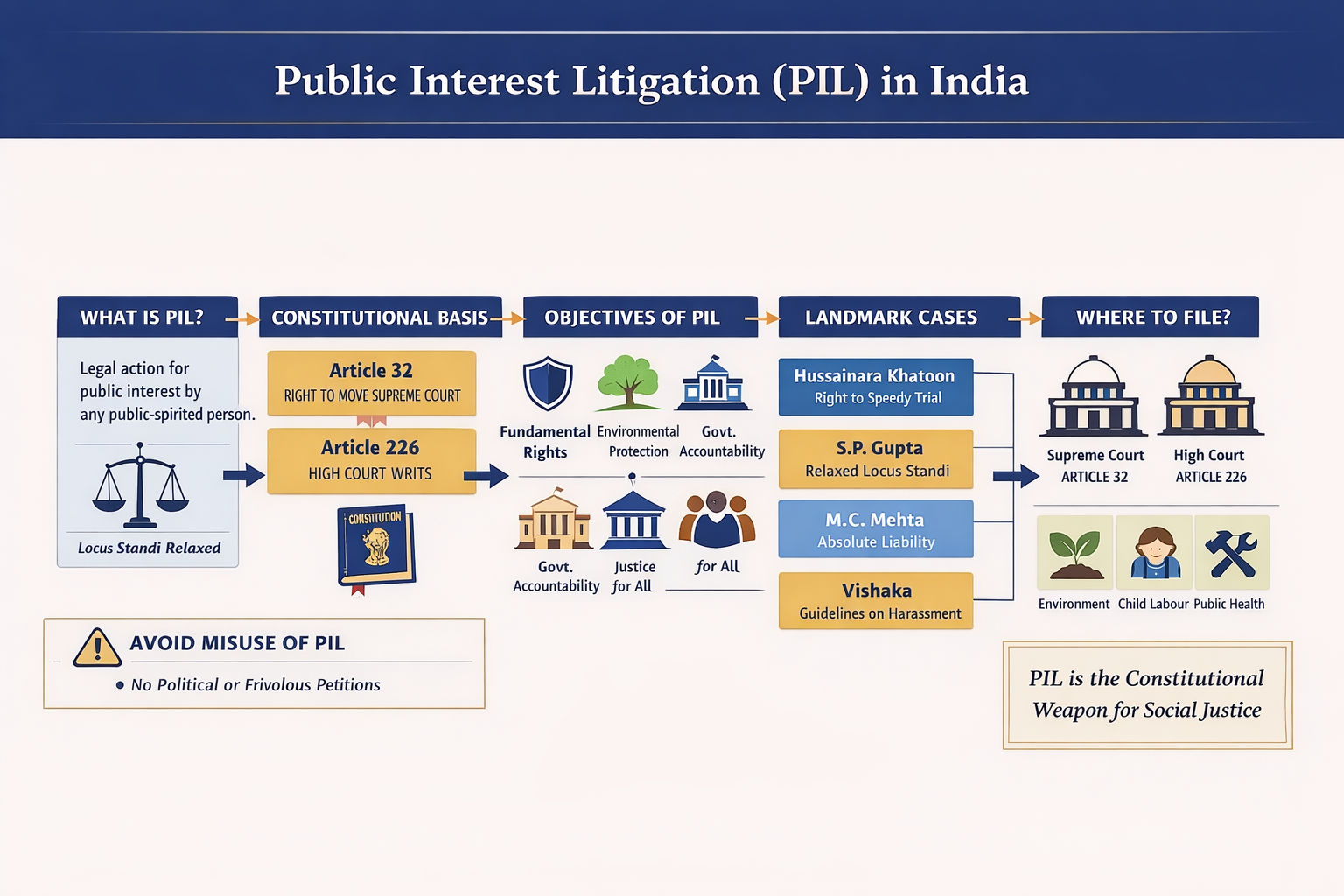
Public Interest Litigation (PIL) in India: History and Landmark Cases

Public Interest Litigation (PIL) in India: History and Landmark Cases

Public Interest Litigation (PIL) has revolutionized the Indian legal system law notes. Explore its evolution from the 1970s, the contribution of Justice P.N. Bhagwati, and essential landmark cases like Hussainara Khatoon and M.C. Mehta in this detailed student guide.

Swati Bhardwaj·Feb 27, 2026·constitutional-law·👏 1
The Doctrine of Basic Structure: Landmark Cases and Constitutional Impact

The Doctrine of Basic Structure: Landmark Cases and Constitutional Impact

The Doctrine of Basic Structure is the judicial safeguard that prevents Parliament from altering the core identity of the Indian Constitution. Established in the 1973 Kesavananda Bharati case, it ensures that features like secularism, democracy, and judicial review remain untouchable.

Swati Bhardwaj·Feb 21, 2026·constitutional-law
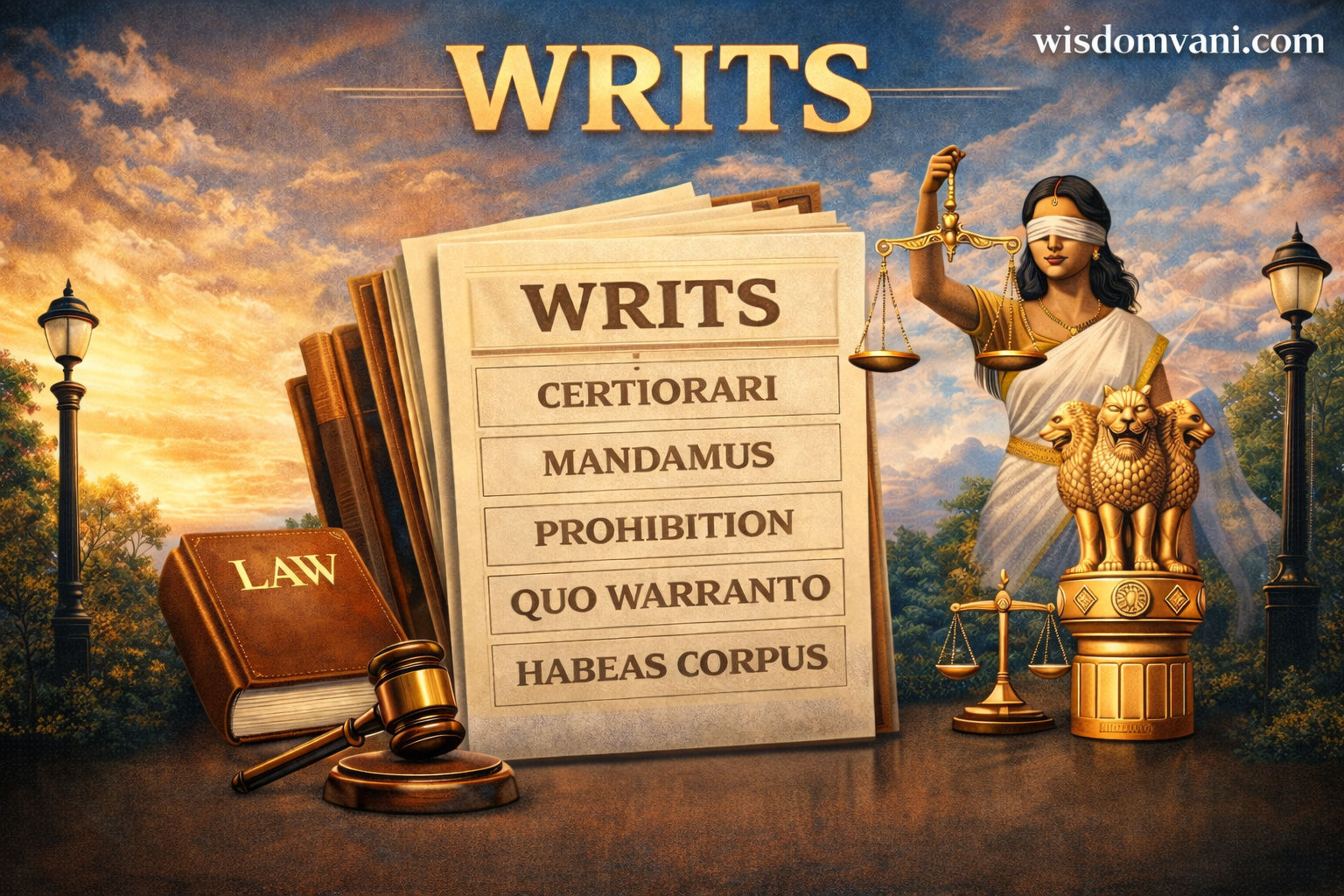
What are Writs? Types, Uses, and Legal Rights Explained

What are Writs? Types, Uses, and Legal Rights Explained

A writ is a powerful legal tool used by courts to protect fundamental rights and command authorities. Discover the 5 types of writs—Habeas Corpus, Mandamus, Prohibition, Certiorari, and Quo-Warranto—and learn when you can use them to seek justice.

Swati Bhardwaj·Feb 17, 2026·constitutional-law
Fundamental Rights in Indian Constitution

Fundamental Rights in Indian Constitution

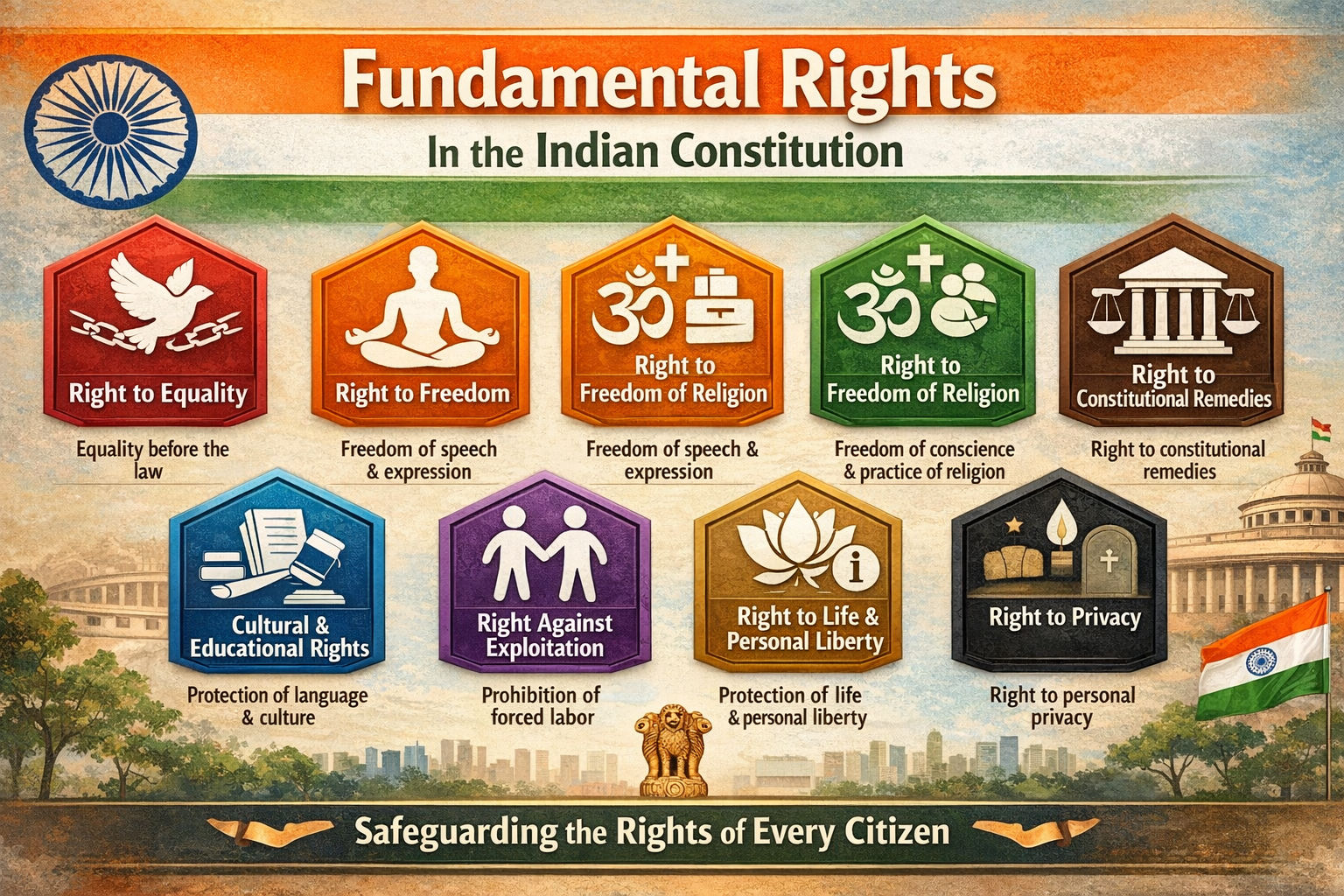
Are you aware of the shield that protects your freedom? Dive into this comprehensive guide on the six Fundamental Rights guaranteed by the Indian Constitution. From the Right to Equality to Constitutional Remedies under Article 32, we break down every article (12–35) with clear explanations to help you understand your power as a citizen and excel in competitive exams like UPSC.

Swati Bhardwaj·Feb 12, 2026·constitutional-law
Menstrual Health Now a Fundamental Right: Supreme Court’s Historic Verdict

Menstrual Health Now a Fundamental Right: Supreme Court’s Historic Verdict

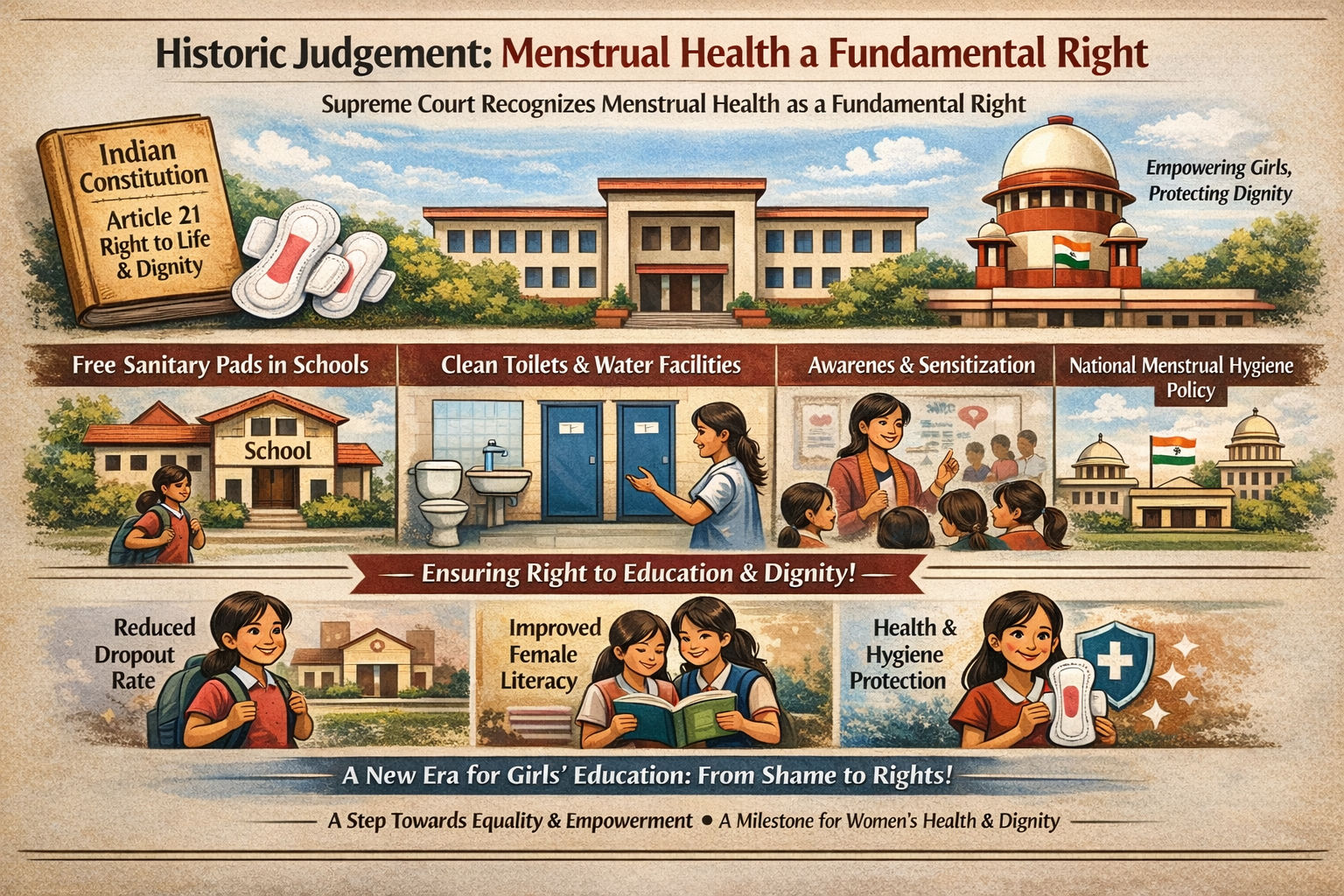
In a landmark ruling on January 30, 2026, the Supreme Court of India declared that access to menstrual hygiene is a Fundamental Right under Article 21. Linking menstrual health to the "Right to Life and Dignity," the Court issued strict directives to all schools to provide free sanitary pads and ensure clean infrastructure. This historic move aims to reduce dropout rates and empower girl students across the nation.

Swati Bhardwaj·Jan 31, 2026·constitutional-law·👏 77
UGC Rules 2026: Need for Equity in Higher Education

UGC Rules 2026: Need for Equity in Higher Education

The UGC Rules 2026 aim to promote equity and prevent discrimination in higher education institutions across India. However, their constitutional validity has been questioned on the grounds of Articles 14, 15, and 21 of the Indian Constitution. This article critically examines the objectives, provisions, judicial concerns, and potential constitutional implications of the UGC Equity Regulations, 2026.

Rohini Shrivastava·Jan 30, 2026·constitutional-law·👏 11
STATE UNDER ARTICLE 12 OF INDIAN CONSTITUTION

STATE UNDER ARTICLE 12 OF INDIAN CONSTITUTION

The Indian Constitution, a living legal document, has enshrined certain fundamental rights as inviolable and enforceable against the “State.”

Swati Bhardwaj·Jan 19, 2026·constitutional-law
POWERS AND FUNCTIONS OF THE PRESIDENT OF INDIA

POWERS AND FUNCTIONS OF THE PRESIDENT OF INDIA

The President of India, as the ceremonial head of state and the first citizen, holds a pivotal role in the nation’s governance framework.

Swati Bhardwaj·Jul 6, 2025·constitutional-law