
Is Religion a Pillar of Law? An Essential Guide for Law Students
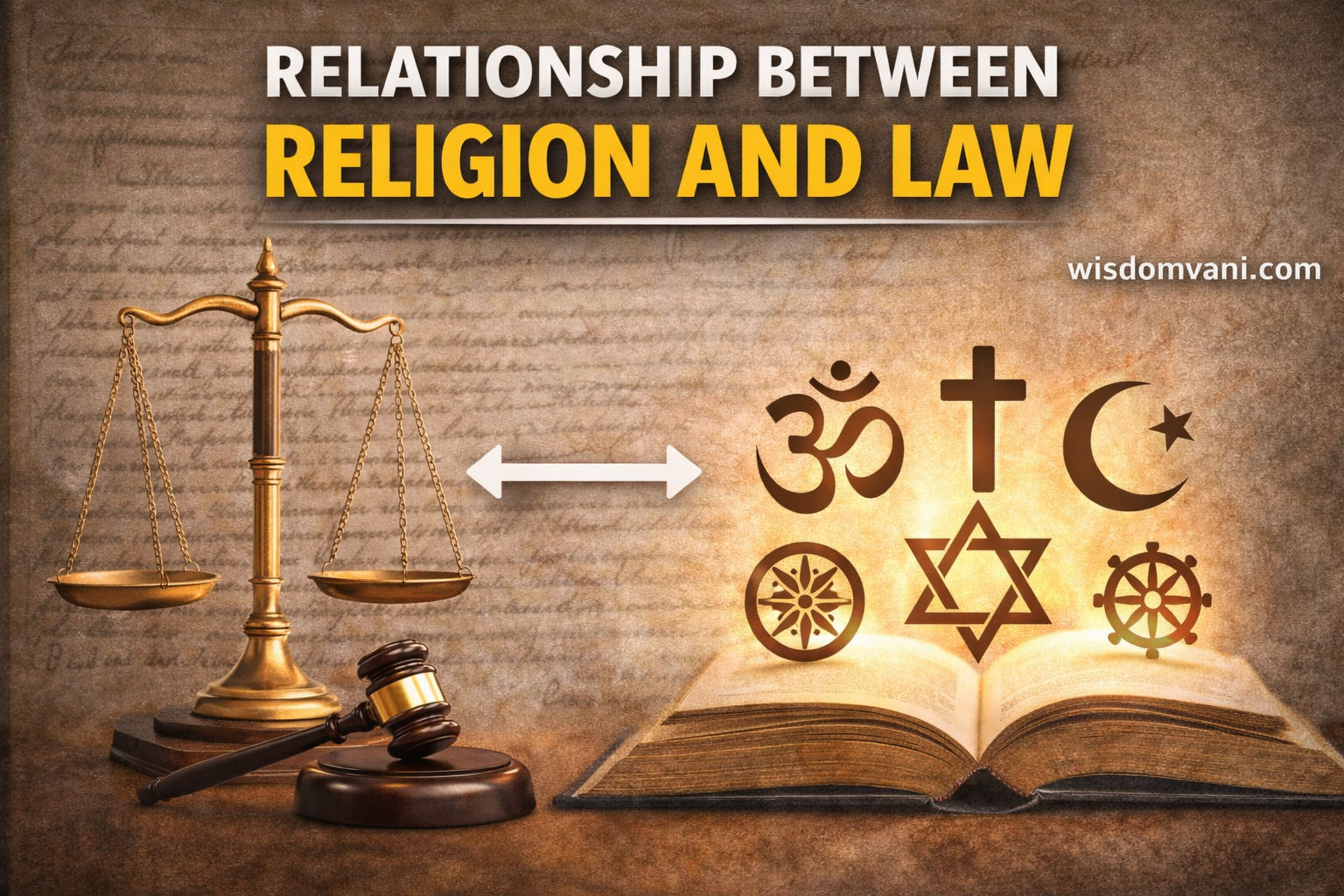
For centuries, the debate over the relationship between religion and law has been a cornerstone of jurisprudence. For law students, understanding this connection isn't just about history; it’s about understanding the "spirit" behind the statutes we follow today. While modern legal systems often strive for secularism, the roots of justice, morality, and social order are deeply intertwined with religious traditions.
This article serves as a foundational note on how religion acts as a pillar of law.
1. Historical Context: Law as a Divine Command
In ancient civilizations, there was no distinction between "legal" and "religious" duties. Law was viewed as a divine command.
Ancient Egypt: The concept of Ma’at represented truth, balance, and order, governed by both the Pharaoh and the gods.
Dharma in India: In Hindu philosophy, Dharma is a comprehensive term covering religious duties, moral rights, and legal obligations.
The Ten Commandments: For Judeo-Christian traditions, these provided a moral blueprint that influenced Western criminal law (e.g., prohibitions on theft and murder).
2. Religion as the Source of Morality
Law is often described as "codified morality." Many of our current legal prohibitions are essentially secularized versions of religious sins.
Sanctity of Life: The legal protection against homicide mirrors the religious belief that life is a gift from a higher power.
Truthfulness: The requirement for witnesses to take an "oath" in court stems from the religious fear of divine retribution for perjury.
Human Rights: Many scholars argue that the concept of "inherent human dignity" found in the UN Declaration of Human Rights has its origins in the religious idea that all humans are created equal in the eyes of the Divine.
3. Major Legal Systems Rooted in Religion
Several world legal systems are either directly derived from or heavily influenced by religious texts.
A. Sharia Law (Islamic Jurisprudence)
Based on the Quran and Hadith, Sharia governs not just rituals but also contracts, crimes, and family matters. It is a primary example of a "living" religious legal system.
B. Canon Law (Catholic Church)
The Catholic Church’s internal legal system influenced much of European civil law, particularly in the areas of marriage, education, and social welfare.
C. Personal Laws in India
India follows a unique model where individuals are governed by secular criminal laws but follow Personal Laws (Hindu Marriage Act, Muslim Personal Law, etc.) based on their religion for matters like inheritance and divorce.
4. The Shift: From Religious Law to Secularism
As societies evolved, the Age of Enlightenment introduced the concept of Secularism—the separation of Church and State.
The Secular Argument: Laws should be based on reason, logic, and social utility rather than divine revelation.
The Legal Impact: This shift led to the creation of Constitutions that guarantee freedom of religion while ensuring the state remains neutral.
5. Key Differences: Religious Law vs. Secular Law
| Feature | Religious Law | Secular Law |
| Source | Divine Revelation/Scriptures | Legislatures/Parliaments |
| Enforcement | Conscience & Divine Judgment | Police, Courts, & Prisons |
| Nature | Often immutable (unchanging) | Dynamic and adaptable |
| Objective | Spiritual salvation & social order | Public safety & social justice |
6. Challenges in the Modern Era
The intersection of religion and law often leads to complex legal battles. For a law student, these are the "Grey Areas":
Freedom of Expression vs. Blasphemy: How do we protect free speech while respecting religious sentiments?
Uniform Civil Code (UCC): Should there be one law for all citizens, or should religious groups keep their own personal laws?
Religious Exemptions: Can a citizen break a neutral law (like wearing a helmet) because of a religious requirement (like wearing a turban)?
7. Conclusion: Why This Matters for Students
Religion is not just a "pillar" of the past; it is a lens through which we view justice. Even in the most secular courts, the underlying values of empathy, equity, and good conscience are often echoes of ancient religious teachings. Understanding this relationship helps lawyers navigate the cultural sensitivities of their clients and the philosophical foundations of the law.
Comments 0